


Revolutionizing Visual Creativity: How AI Transforms Image Creation
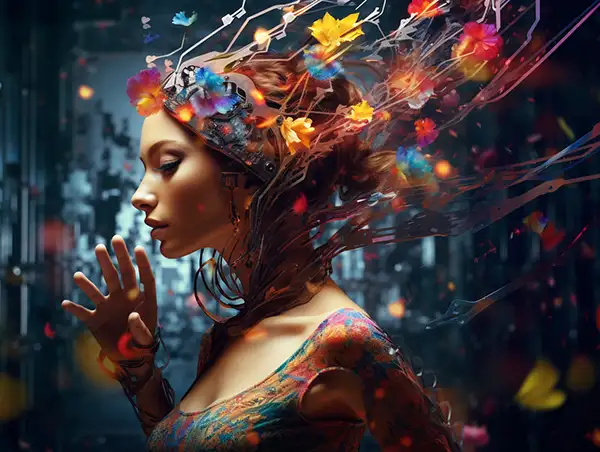
In the realm of digital art and design, a ground-breaking transformation is underway, powered by the capabilities of artificial intelligence (AI). This evolution in image creation marks a significant shift in how visuals are conceived, developed, and realized. AI-driven image creation is not just a tool but a collaborator, bringing a new dimension to the artistic process.
The Emergence of AI in Visual Arts
The integration of AI in visual arts is a recent phenomenon but one that has rapidly gained momentum. Traditional image creation methods, involving manual sketching and digital tools, have been the norm for decades. However, AI introduces an innovative approach, blending computational algorithms with creative processes. This fusion has unlocked unprecedented possibilities in image creation, allowing for more intricate, complex, and nuanced visuals.
How AI Assists in Image Creation
AI in image creation functions through a combination of machine learning and neural networks. These systems are trained on vast datasets of images, learning patterns, styles, and techniques. Once trained, the AI can generate unique images based on specified parameters or even enhance and modify existing artworks.
One of the most compelling aspects of AI in this field is its ability to understand and interpret abstract concepts. Artists and designers can input descriptive terms or themes, and the AI generates visual representations of these concepts. This capability is particularly useful in conceptual stages of design, where visualizing abstract ideas can be challenging.
Enhancing Creativity and Efficiency
AI-driven tools are not replacements for human creativity but rather powerful extensions. Artists and designers can explore new creative territories, pushing the boundaries of what’s possible in visual expression. Moreover, AI accelerates the creative process, handling time-consuming tasks like rendering complex scenes or generating multiple design variations, freeing artists to focus on the more creative aspects of their work.
Accessibility and Democratization of Art
One of the most significant impacts of AI in image creation is the democratization of art and design. These AI tools have made high-quality image creation more accessible to a wider audience. Individuals without formal training in art or design can now produce professional-level visuals, leveling the playing field and encouraging a more diverse range of voices in the visual arts.
Ethical Considerations and Challenges
As with any technological advancement, the use of AI in image creation comes with its set of ethical considerations. Issues around copyright, originality, and the role of AI in the creative process are at the forefront of discussions. There’s a delicate balance between leveraging AI as a tool and maintaining the integrity and authenticity of artistic expression.
The Future of AI in Image Creation
The future of AI in image creation is brimming with possibilities. We can expect further advancements in the sophistication and capabilities of these AI systems, leading to even more impressive and realistic images. There’s also potential for greater integration of AI in various stages of the creative process, from initial concept development to final production.
In conclusion, AI’s role in image creation represents a significant leap forward in the world of art and design. By augmenting human creativity, making art more accessible, and opening new avenues for visual expression, AI is not just changing how images are created; it’s reshaping the very essence of artistic creation. As this technology continues to evolve, it will undoubtedly continue to influence and inspire the visual arts in unimaginable ways.
Sign up for 10% off your first order
Subscribe to our mailing list and get 10% off your first purchase