


AI Artists vs. Human Artists: Exploring the Creative Landscape
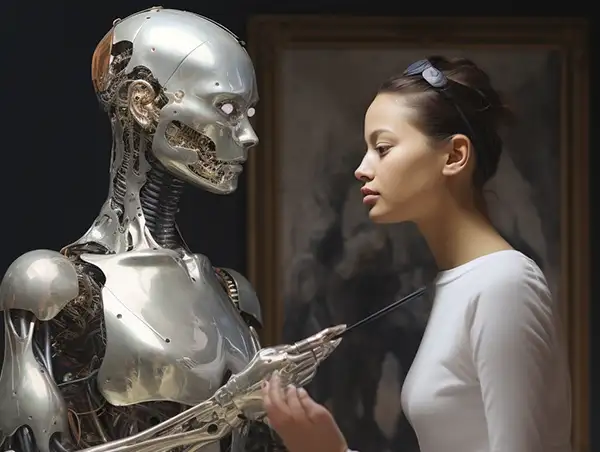
In the ever-evolving world of art, the emergence of Artificial Intelligence (AI) as a creative force has sparked a fascinating debate: how does AI-driven art compare to human-created art? This discussion not only delves into the realms of technology and creativity but also probes the very nature of art itself. As we explore the differences and similarities between AI and human artists, we also touch upon the intriguing realm of collaborative works, where the lines between human and machine creativity are intriguingly blurred.
The Nature of Creativity: AI vs. Human
At its core, creativity in art is about originality, expression, and the communication of ideas, emotions, or concepts. Human artists bring to their work a rich tapestry of experiences, emotions, and personal narratives. Their art is often a reflection of their inner world, societal influences, and the human condition. AI, on the other hand, lacks personal experiences or emotions. It operates on algorithms, data sets, and programmed instructions. However, AI can mimic certain aspects of human creativity, such as learning from existing art styles and generating novel combinations of elements.
The Process of Art Creation
The process of creating art is markedly different between AI and human artists. Human artists often engage in a nonlinear, iterative process, influenced by their subjective experiences, environment, and even spontaneous inspiration. AI artists, contrarily, follow a more structured, data-driven process. They rely on inputs and parameters set by their human programmers or learn from vast databases of existing artwork. This results in a more predictable and systematic approach to art creation.
The Role of Emotional Depth and Context
A key difference lies in the emotional depth and contextual understanding. Human art is imbued with the artist’s emotional depth and cultural context, offering a nuanced perspective on themes like love, despair, or joy. AI, lacking real emotions or cultural immersion, can replicate styles and patterns but often misses the subtleties of emotional and cultural contexts that give human art its depth and resonance.
Similarities in Aesthetic Appeal
Despite these differences, both AI and human-created artworks can achieve a high level of aesthetic appeal. AI-generated art can be striking, harmonious, and visually captivating, often mimicking the styles of great human artists or creating entirely new visual languages. Similarly, human artists have long captivated audiences with their skill, vision, and innovation.
Collaborative Works: A Fusion of Human and AI Creativity
Perhaps the most intriguing development is the collaboration between AI and human artists. These collaborations can take various forms – from AI algorithms providing new tools and perspectives to artists, to artists influencing the development and direction of AI in art. Collaborative works often result in pieces that are unique and could not have been created by either humans or AI alone. This synergy opens up new avenues for exploration in art, where the emotional depth and experience of the human artist merge with the processing power and novel patterns of AI.
Ethical Considerations and Authorship
With AI’s involvement in art, questions of authorship and ethics arise. Who is the real ‘artist’ when a piece is created by AI? Is it the AI itself, the programmer who designed the AI, or a collaborative effort? These questions challenge traditional notions of authorship in art and raise ethical considerations regarding the use of AI in creative processes.
The Future of AI and Human Artistry
Looking ahead, the relationship between AI and human artists is likely to evolve further. AI’s capabilities will continue to grow, potentially leading to more sophisticated and nuanced art creations. Human artists may increasingly adopt AI as a tool, using it to expand their creative horizons. However, the unique qualities of human creativity – its emotional depth, cultural context, and personal touch – are irreplaceable and will continue to hold a special place in the world of art.
Conclusion
In conclusion, while AI and human artists differ significantly in their approach to creativity, both bring unique and valuable perspectives to the art world. The collaboration between AI and human creativity is not only fascinating but also a testament to the ever-evolving nature of art. As we continue to explore this dynamic field, the combined strengths of human and AI artistry promise to enrich our understanding and appreciation of art in its myriad forms.
Sign up for 10% off your first order
Subscribe to our mailing list and get 10% off your first purchase